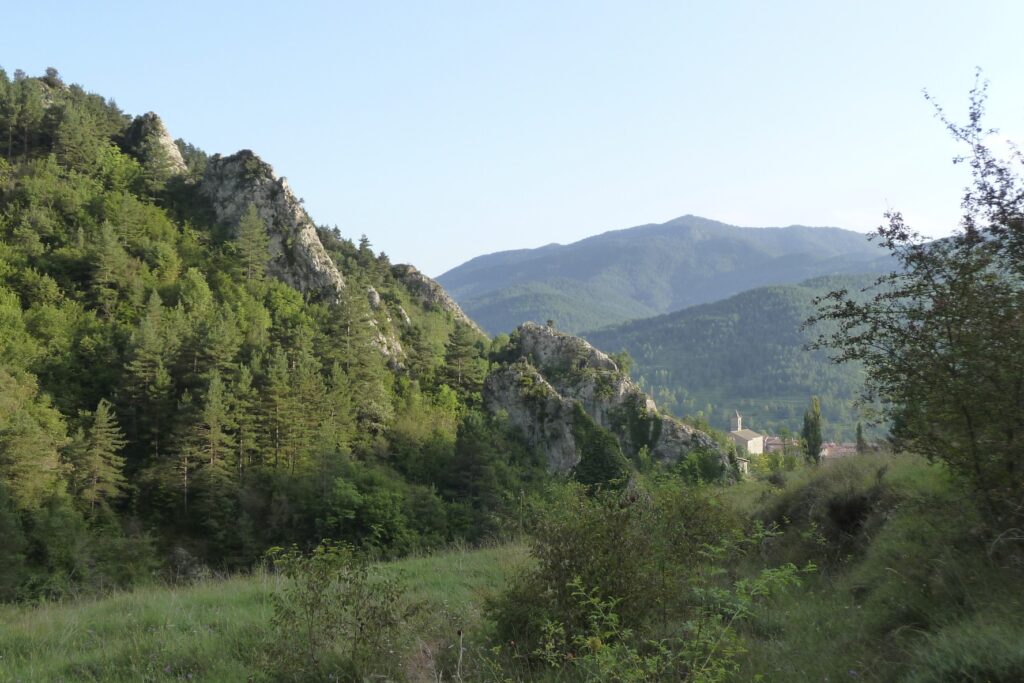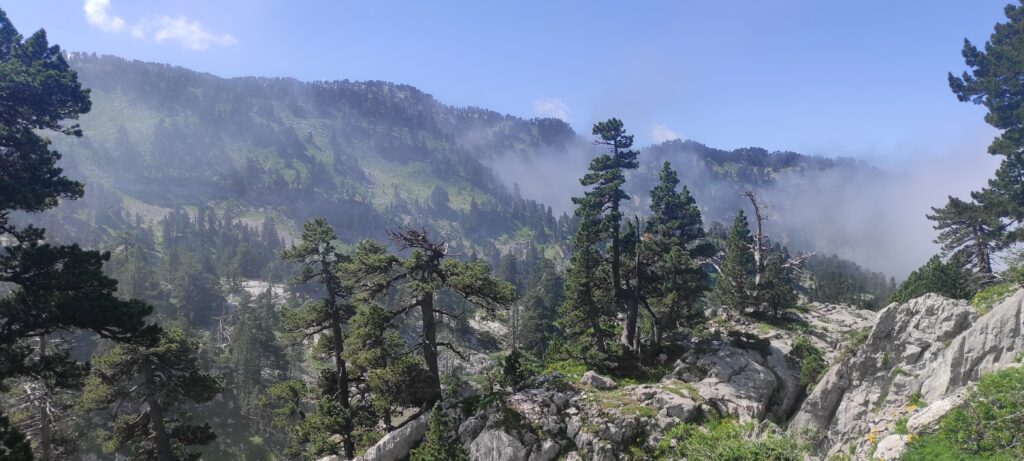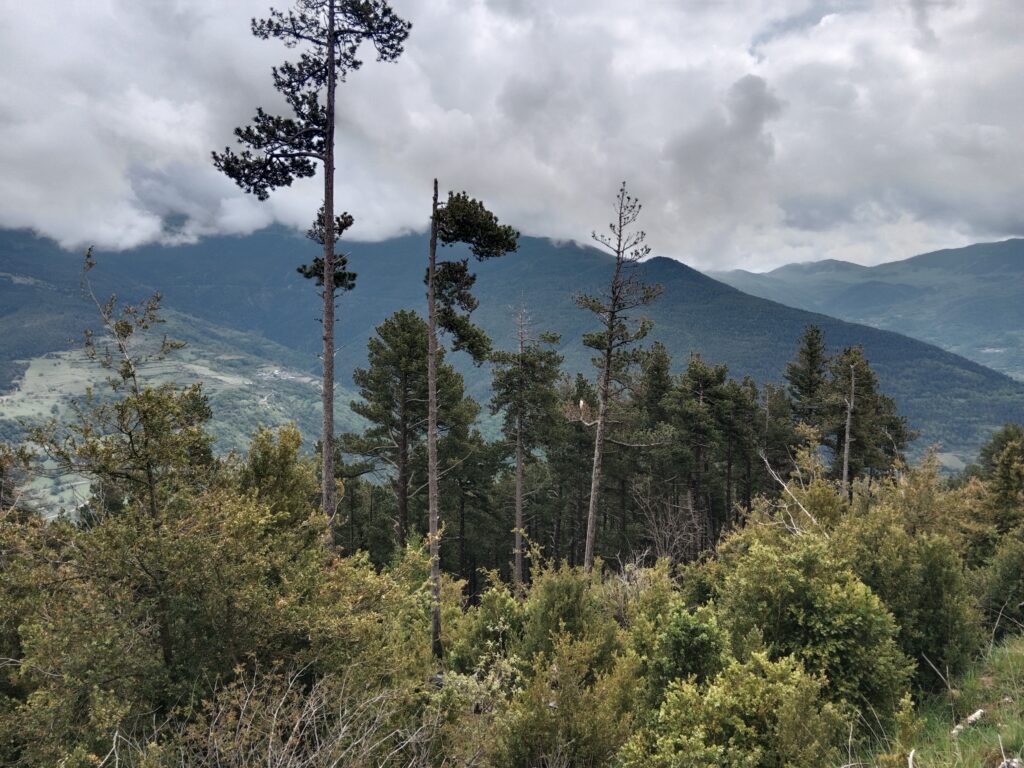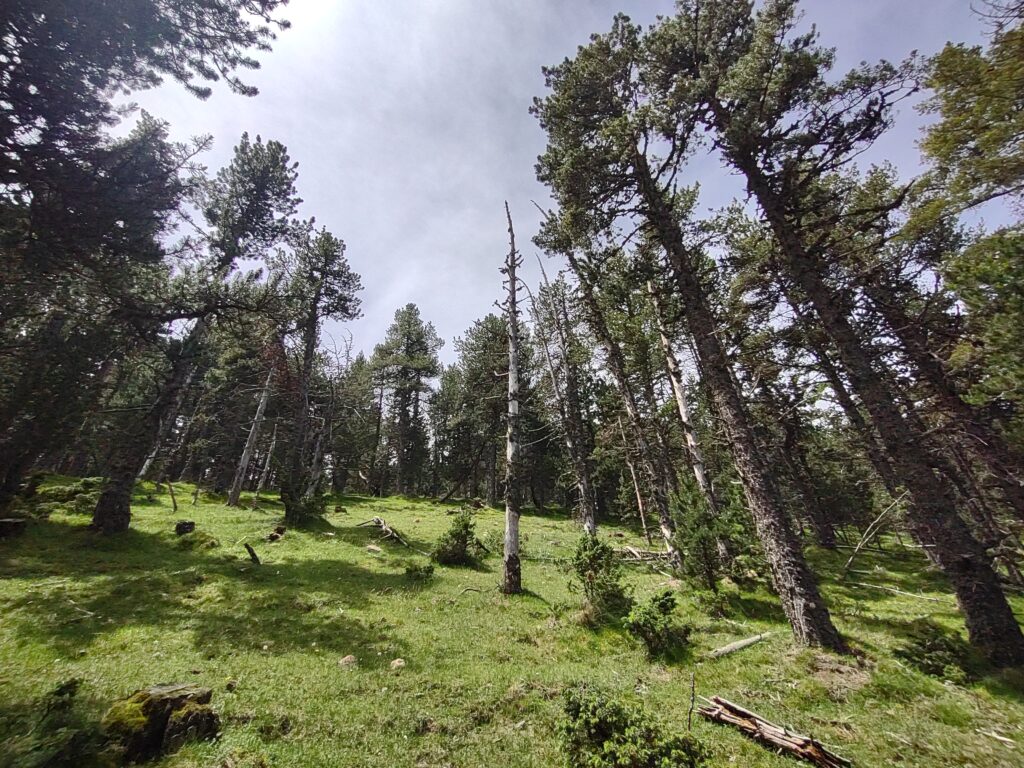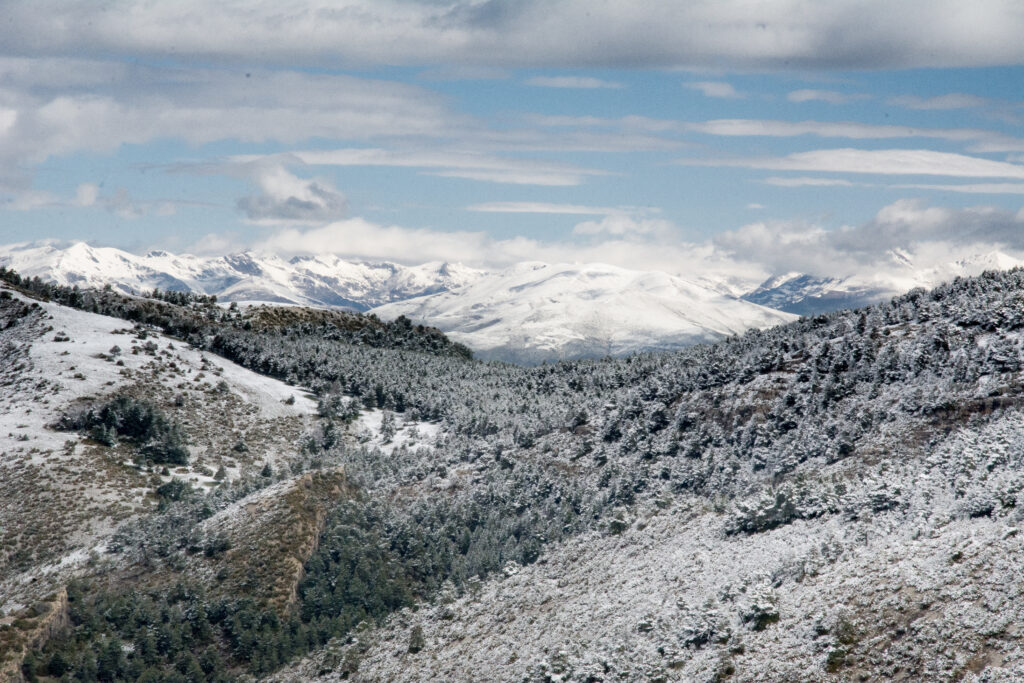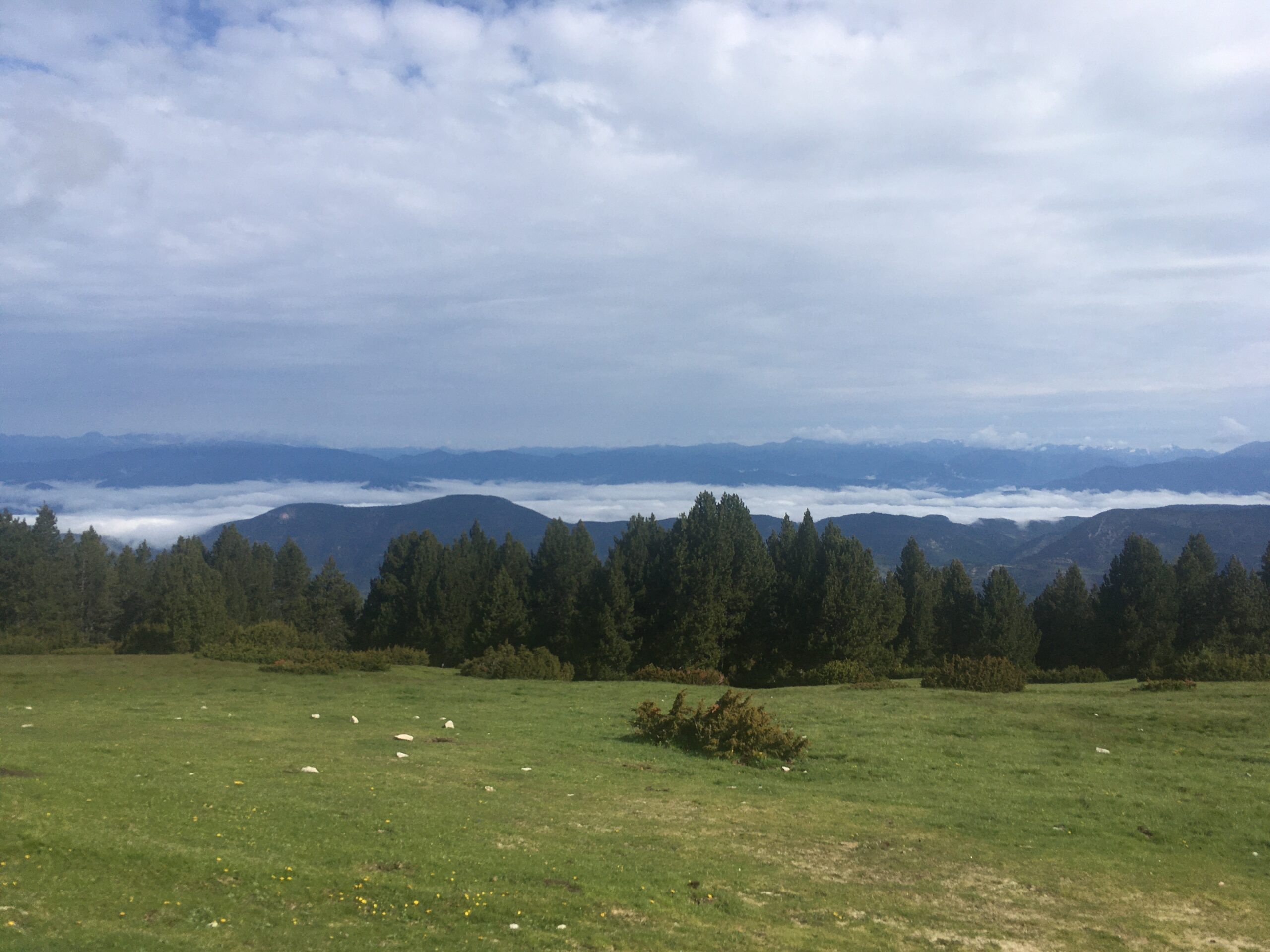
The black pine forests of the Pyrenees have lost part of their natural diversity due to historical logging and the expansion of former pasturelands. This lack of understory species and fruit‑producing plants limits the food and shelter available for wildlife.
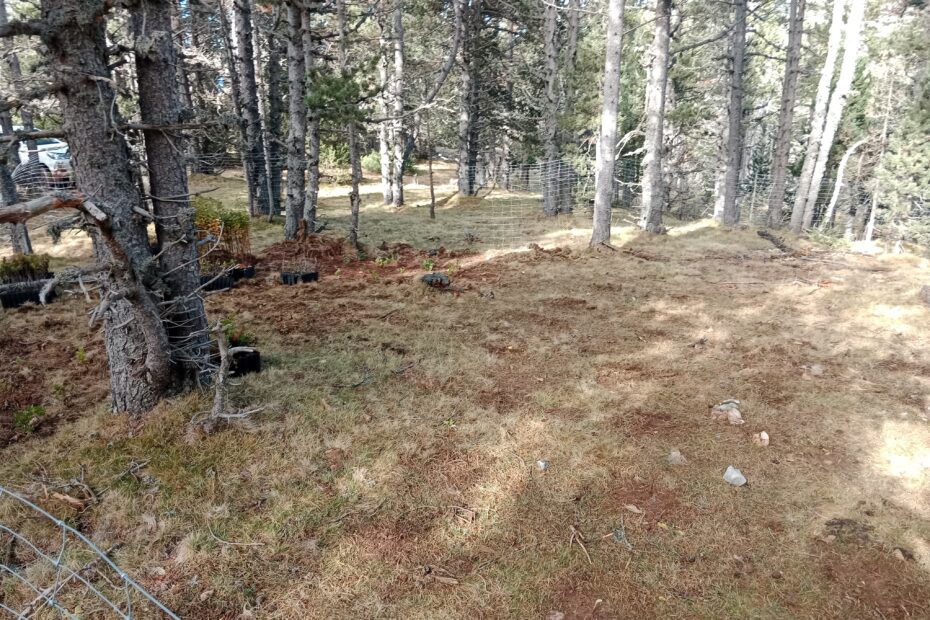
To reverse this trend, the LIFE UNCINATA project is carrying out a forest restoration experiment on the Alinyà estate. Fruit‑bearing species —such as bearberry, mezereon, rowan, wild apple, and red elderberry— are being planted to increase biodiversity and strengthen the forest’s ecological functions.
The team is testing several techniques to determine which ones best support seedling establishment and growth: collective fencing to reduce wildlife pressure, branch‑based protection, different light conditions, and physical soil treatments. Preliminary data from the first year already provide valuable insights into plant survival and the effects of wildlife.
Monitoring will continue until the end of the project to identify the most effective measures for restoring these high‑value habitats. Restoring, diversifying, and helping wildlife regain food and shelter are key steps to securing the future of black pine forests and creating management models that can be replicated across Europe.